Blog
Winning every surface where people search and shop
Playbooks, product updates, and points of view on growing retail revenue with AI.
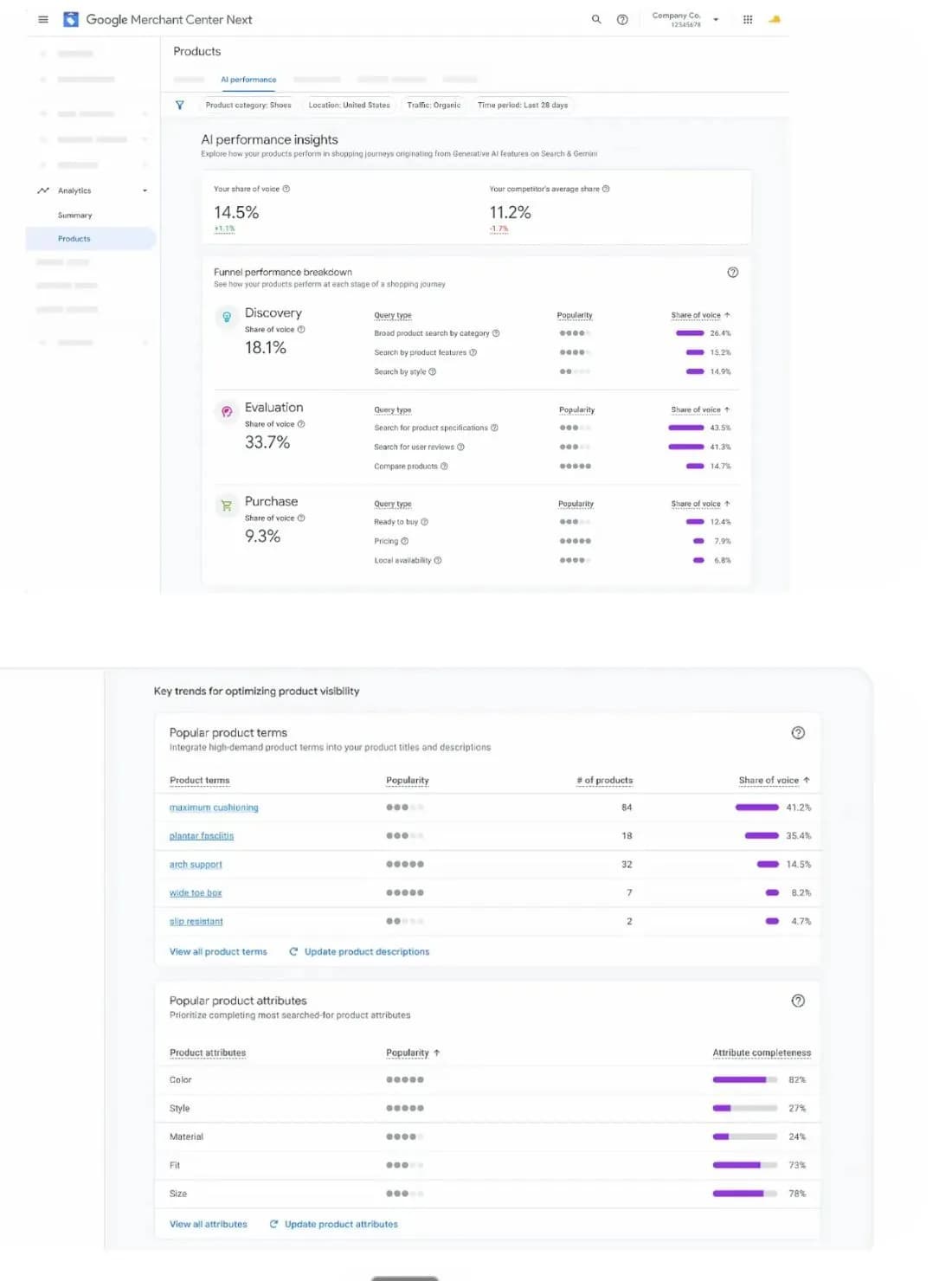
Google may have just created a billion-dollar optimization market
AI visibility struggled to attract serious budget for a simple reason: nobody funds what they can't measure. With Google's new AI Performance Insights, it's measurable now. So the money moves.
 Guides
Agentic commerce: what it is, what changed in 2026, and what a brand actually has to do
Agentic commerce is AI agents buying on a shopper's behalf. What changed in 2026, what an agent reads from your catalog, and what to fix before Q4.
GuidesDoes feed optimization increase sales? The anatomy of a controlled test
Does feed optimization increase sales? Yes, against a control. Get the full test design: matched spend, 28-day holdout, difference-in-differences.
GuidesHow AI Shopping Assistants Actually Pick Which Products to Recommend
AI shopping assistants retrieve before they rank. See what each surface reads from your product record, and which missing attributes disqualify you.
GuidesWhat actually goes in Google Merchant Center conversational attributes
What actually goes in Google Merchant Center conversational attributes: worked before-and-after values for apparel and home, plus where to mine them.
GuidesMerchant Center suspended for misrepresentation: the checklist, in the order we find them
Merchant Center suspended for misrepresentation? Work this checklist in the order we find them, catch every mismatch, and appeal once with the whole fix.
GuidesProduct attributes: which ones each discovery surface reads, and what a good one looks like
Which product attributes each discovery surface reads, what a well-formed value looks like, and the 2026 Merchant Center fields to fill in first.
GuidesProduct Data Enrichment: What It Means When the Machines Are the Reader
Product data enrichment is not filling empty fields. Get the working definition, the four readers, the boundary with PIM, and a way to measure lift.
GuidesProduct feed optimization: what it is, what actually moves revenue, and how to prove it
Product feed optimization is a vocabulary problem. The three layers, the eight changes that move revenue, and how to prove the lift with a control.
GuidesProduct taxonomy: where a product sits, and which queries it is eligible for
A product taxonomy decides which queries your catalog is eligible for. Learn to map it, structure it and maintain it across search, Shopping and AI.
TakesA buying standard for AI commerce
Four questions to ask before you fund any AI marketing tool. Every retail budget now carries an AI line item, and almost nothing on it arrives with a way to know whether it worked. Here's the standard, and the one shortcut to remember it: would it survive a finance review?
 Takes
TakesThe most expensive thing in retail right now
Brands are pouring attention into a future that isn't generating revenue yet, while the surfaces actually producing revenue today get treated like settled infrastructure. A preview of my CommerceNext session with Ken Pilot and Noam Paransky.
TakesYou don't have an agency problem. You have an input problem.
A CMO fired three paid agencies in two years and decided you can't find a good one anymore. The real problem was upstream: the old agency edge has been commoditized, and the leverage has moved to the inputs only the brand controls.
 Takes
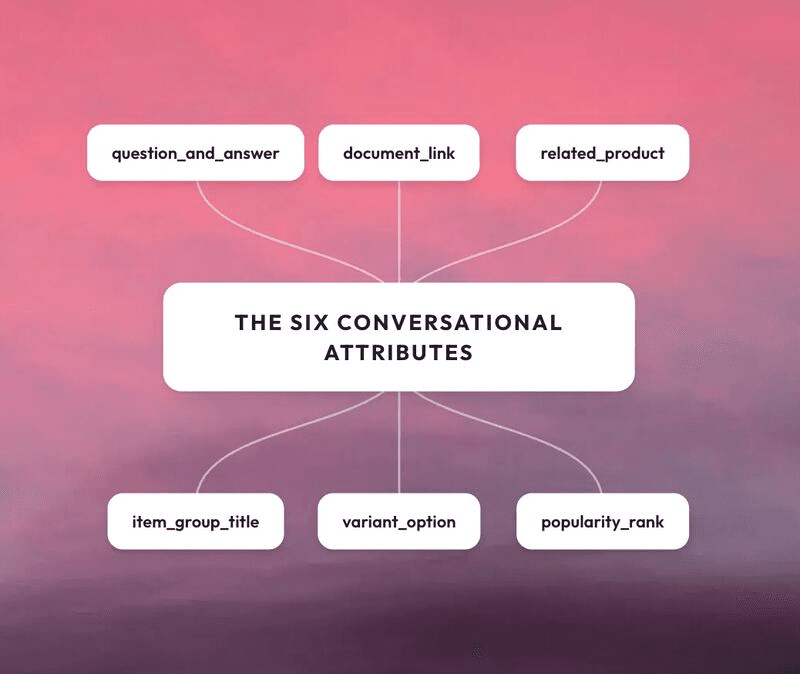
TakesGoogle says conversational attributes are optional. History says otherwise.
Mobile-friendly, page speed, structured data: Google introduced each as optional, and each became the price of entry. Conversational attributes, its new AI-shopping feed fields, look like the next one.
TakesIt always turns out to be a feed
OpenAI spent a year pitching conversational shopping, then quietly rebuilt something that looks a lot like Google Merchant Center. Every platform that monetizes shopping ends up needing the same thing first: a feed.
TakesAutomation commoditized everything except your feed
Google spent five years making paid search dramatically easier to run, which is exactly why it keeps getting more expensive to win. A classic Jevons paradox: automation standardized the edge brands used to build by hand. The one input it can't commoditize is your product feed.
TakesGoogle just told the market AI content isn't the moat. Structured product data is.
Google's official guide on optimizing for AI search quietly dismissed the llms.txt-and-content-variants playbook a whole vendor category was built on. For retailers, the moat isn't AI-optimized content. It's structured, machine-readable product data.
 Customers
$80M in incremental revenue last month, one optimization: the feed
Four 28-day Google Ads tests across a luxury house, a US department store, a global home retailer, and an athletic-wear brand. Every lift came from one place: the Google Merchant Center feed.
 Takes
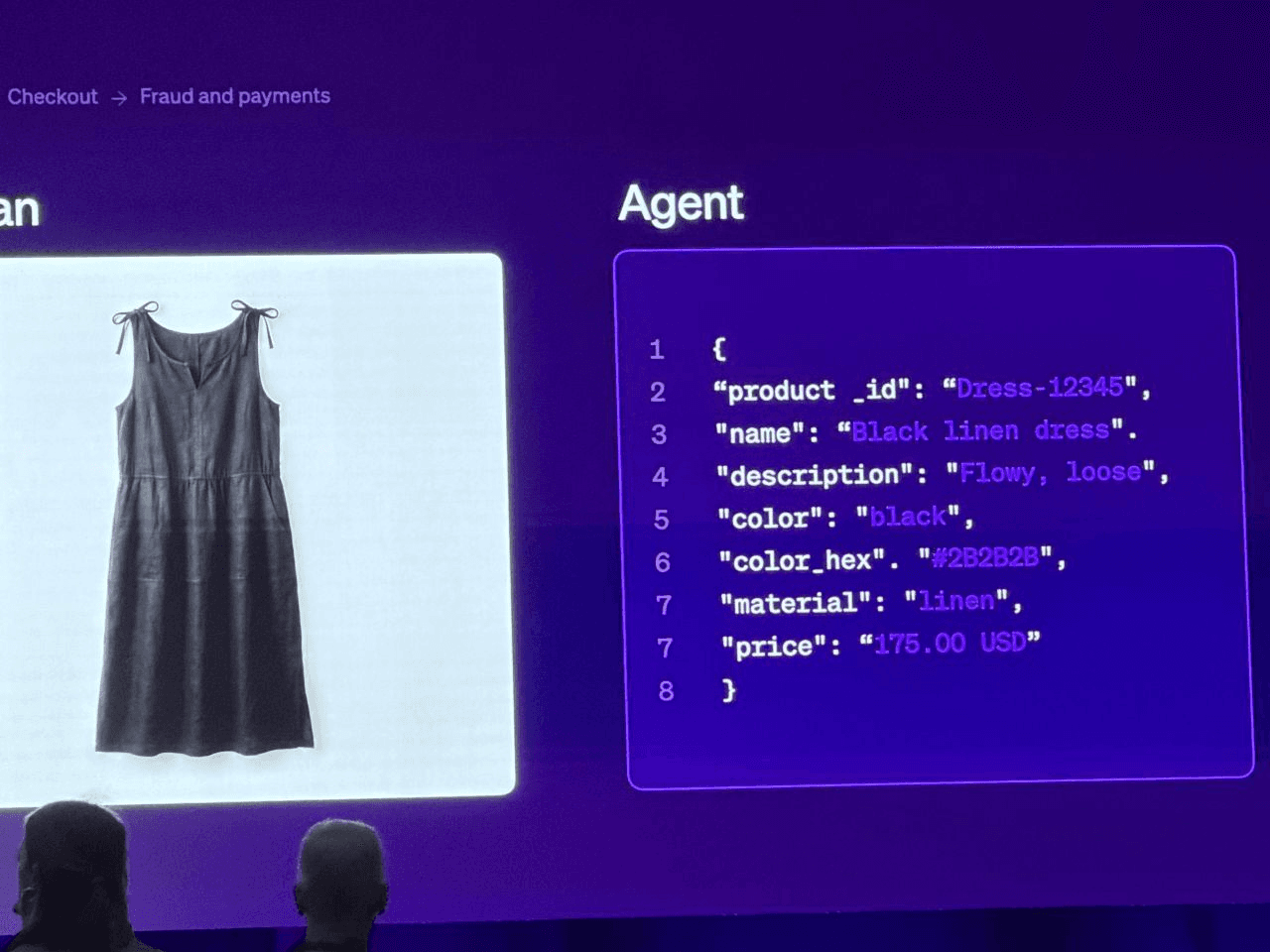
TakesStripe is building the rails. Your product data decides who wins on them.
A day at Stripe Sessions made one thing unmistakable: agentic commerce has moved from interesting future to build now. Stripe is building the payment rails. The brands that win on them will already have their product data structured for agents.
TakesBrands are paying for bad product data twice now
Adobe says 34% of retail product pages can't be properly read by AI, even as the AI channel converts 42% better. The cost of thin product data used to be invisible. Answer engines just made it impossible to ignore.
 Takes
TakesNRF 2026 Takeaways: Retail Is Being Rewired Around AI Discovery
NRF 2026 made clear that AI is no longer a nebulous concept: it is already reshaping how retail teams approach discovery, personalization, and growth. Here is what stood out and why it matters.
 Takes
TakesFrom Experimentation to Expectation: How AI Shopping Normalized Faster Than Retail Prepared
Over the course of 2025, AI-powered shopping moved from cautious experimentation to everyday utility, shifting how consumers search, discover, and decide what to buy.
 Guides
The Role of Product Content in AI Search and Discovery
Product discovery is experiencing its biggest shift since digital commerce began. This report gives retailers a framework for structuring product content so generative engines can surface it.
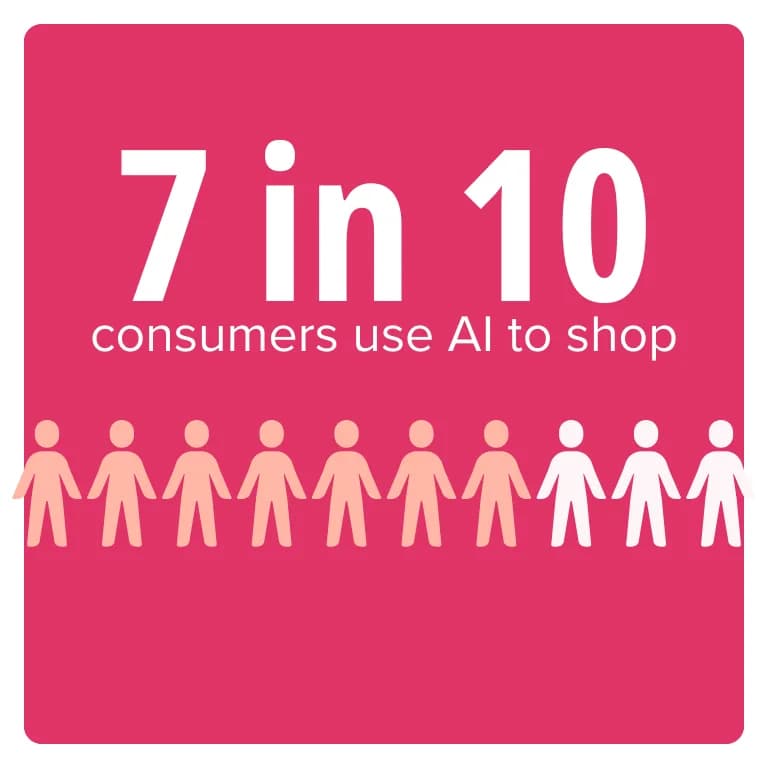
GuidesThe Readiness Gap: Why 70% of Shoppers Are Ahead of Retailers in AI Commerce
Shoppers are adopting AI-powered shopping faster than retailers can adapt. This report reveals how consumers use AI to search, compare, and buy, and what brands must do to stay visible.
Takes6 Things Every Retailer Needs to Know About Agentic Shopping Right Now
Consumers no longer type short keywords; they express intent in full sentences and AI agents reason through them. Six takeaways on the shift from ranking to reasoning.