01
Discover gaps
Scan feeds, PDPs, schema, and attributes against the active surface and goal.
58Out of 100
- Required Field Present14,832 / 14,832
- Image Missing147 SKUs
- Description Issues64 SKUs
- Title Issues87 SKUs
- Ingestion Issues28 SKUs
How Lily Max works
Your team sets the goal. Lily agents execute the work. Your team makes the final decision.
Operating model
Lily Max is not an uncontrolled black box. It is a goal-based system. Your team defines the business outcome, the surface, the product set, the cadence, and the approval rules. Lily agents do the operational work and prepare what should ship.
01
Performance teams decide what matters first, from Google Shopping ROAS to onsite search conversion.
02
Lily agents evaluate the feed, PDPs, attributes, and structured data against the surface-specific goal.
03
Teams get a clear readout with the expected impact, confidence, and next step.
Optimization loop
The moat is the system. Lily doesn't just generate content in batches. It runs a continuous experiment engine that learns from every surface, every test, and every customer.
Operational pace
In a landscape that changes by the week, you need a partner that can pivot just as fast. When Google introduced Conversational Attributes in Merchant Center, a new product-data format built for AI Mode, Gemini, and Business Agent, Lily Max implemented support for all six attributes within days. Without that level of agility, brands lose visibility, traffic, and revenue.
The Six Conversational Attributes
Tested, not promised
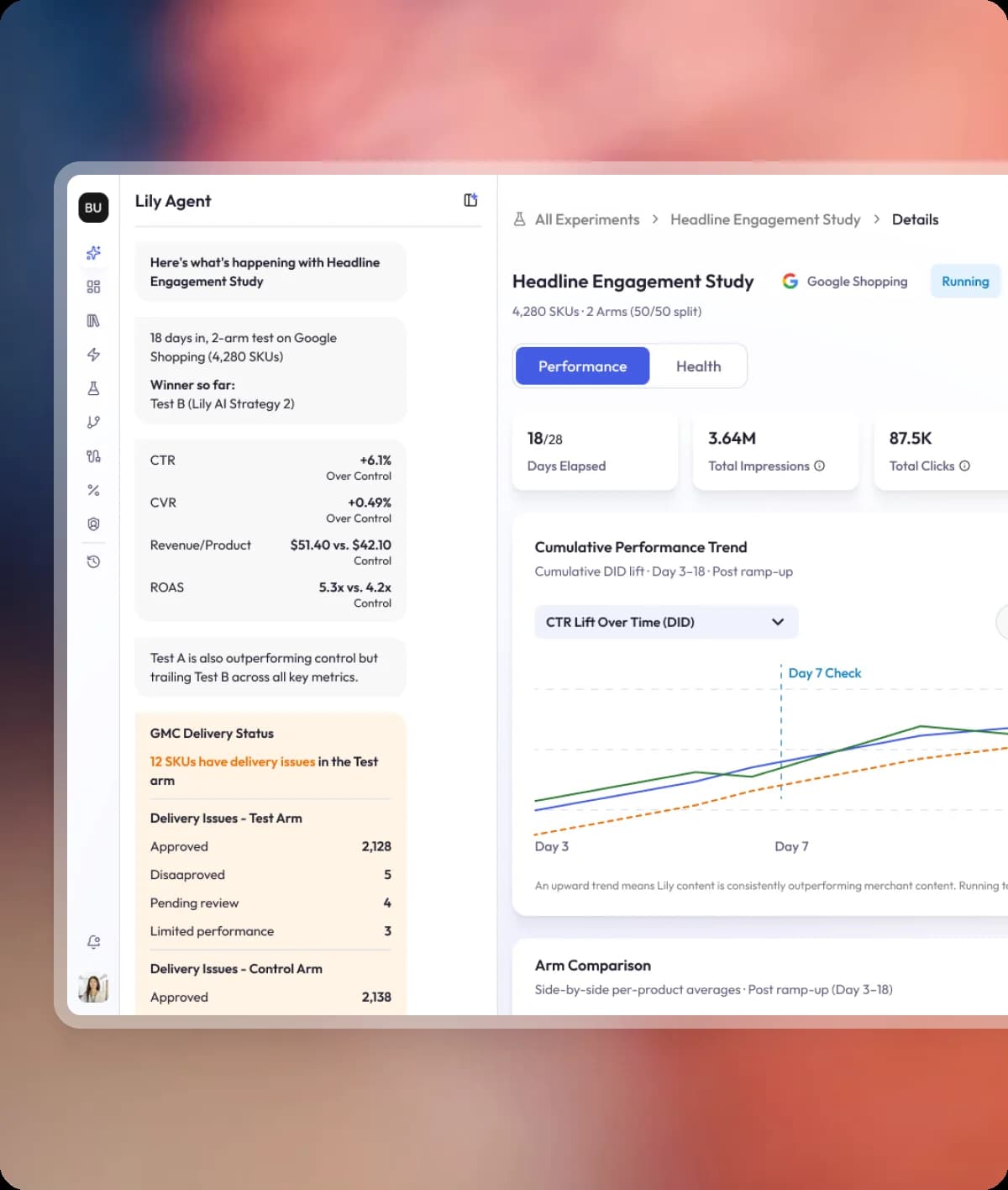
Every performance claim should be CFO-ready. Lily Max pairs lift numbers with the methodology behind them, so teams can separate directional improvement from validated impact.
What Lily Max does
Lily Max optimizes the product intelligence your feed manager, catalog system, or commerce stack distributes.
Content is one output. The platform tests which product signals actually improve visibility, conversion, and ROAS.
AEO tools tell you where you show up. Lily Max improves the product intelligence that determines whether you show up.
One engine, every AI-mediated surface
Lily Max uses goal-based AI agents to optimize product intelligence across paid, organic, onsite, and agentic commerce surfaces, including the Google, Meta, LLM, and retailer-owned systems that decide what shoppers see.
Goal-based agents enrich, evaluate and republish your catalog continuously
 Google Ads
 Claude
 AI Mode
 Meta Ads
 Gemini
 Onsite Search
 AI Overview
 Amazon
Why Lily Max
Lily Max covers agentic commerce, but does not stop there. The same operating discipline extends across the paid, organic, onsite, and AI discovery surfaces that drive performance today.
Content is an output. Lily Max tests which product intelligence actually lifts performance, then deploys what wins.
Feed managers distribute product data. Lily Max improves the product intelligence those feeds carry.

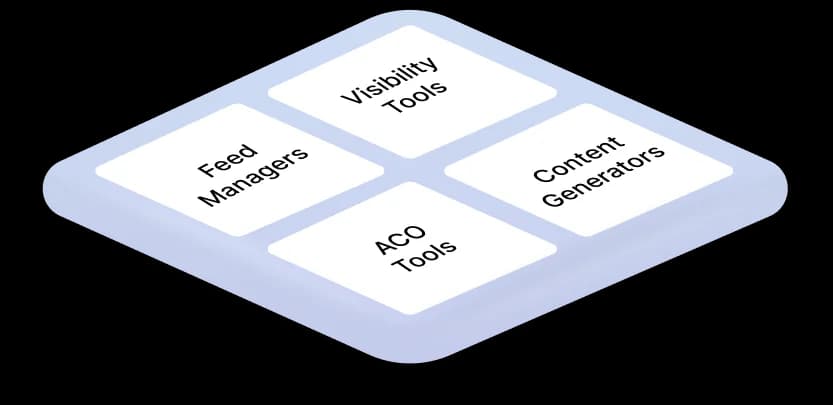
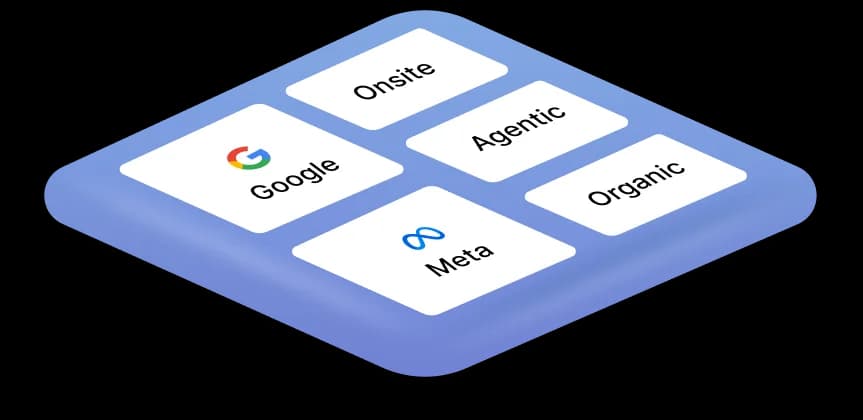
ACO optimizes agentic surfaces. Lily Max applies the same discipline across agentic commerce plus Google, Meta, organic, and onsite.
Visibility tools tell you where you appear. Lily Max improves the inputs that determine whether AI systems surface your products.

Get started
Lily Max will score your product intelligence gaps and identify where richer, AI-ready attributes can improve visibility, conversion, and ROAS without replacing the tools your team already uses.
Lily Max runs a continuous optimization loop. Your team sets the goal, then agents discover product-data gaps, generate enrichments, launch controlled tests, measure the lift, and feed the winners back into the next round, with your approval before anything ships.
Your team does. Lily Max is a goal-based system, not a black box: you define the surface, the product set, the success metric, the test cadence, and the approval rules, and the agents do the operational work toward that goal.
Yes. Nothing goes live without your sign-off. You review the proposed changes and the projected impact, then approve what reaches the feed, so agents handle the volume while humans own the decisions.
There are five: detect gaps, generate enrichments, launch a controlled test, measure the lift, and recommend what to scale. Each test makes the next one smarter, because results feed back into the system.
Lily Max scores your catalog against what each surface rewards, then ranks the highest-impact gaps. It scans feeds, product pages, schema, and attributes for missing fields, weak titles, and thin descriptions before any enrichment work begins.
Every result is measured against a control. Lily Max uses matched-spend A/B tests, holdout groups, and difference-in-differences analysis, then reports lift with confidence intervals, so results separate validated impact from directional movement and hold up to a finance review.
A matched-spend A/B test runs the enriched group and the control group at the same spend level, so any difference in performance reflects the product-data change rather than a bigger budget. It is how Lily Max isolates the effect of enrichment.
Lily Max is built to ship support for new surface capabilities in days, not quarters. When a platform introduces a new product-data type, a catalog that is always scored and always testable can adopt it quickly, rather than waiting a release cycle.
The score is not the outcome. Lily Max scores product information on completeness, correctness, compliance, relevance, and differentiation, and uses that score to find the signals most likely to move visibility, conversion, and ROAS, which it then tests.
Most teams connect their data and launch within days, then see results as the first controlled tests resolve. Timelines vary by catalog size and starting feed quality, and Lily Max shows where to expect impact first before any credits are spent.