Google says conversational attributes are optional. History says otherwise.
Part of: Product feed optimization
View on LinkedIn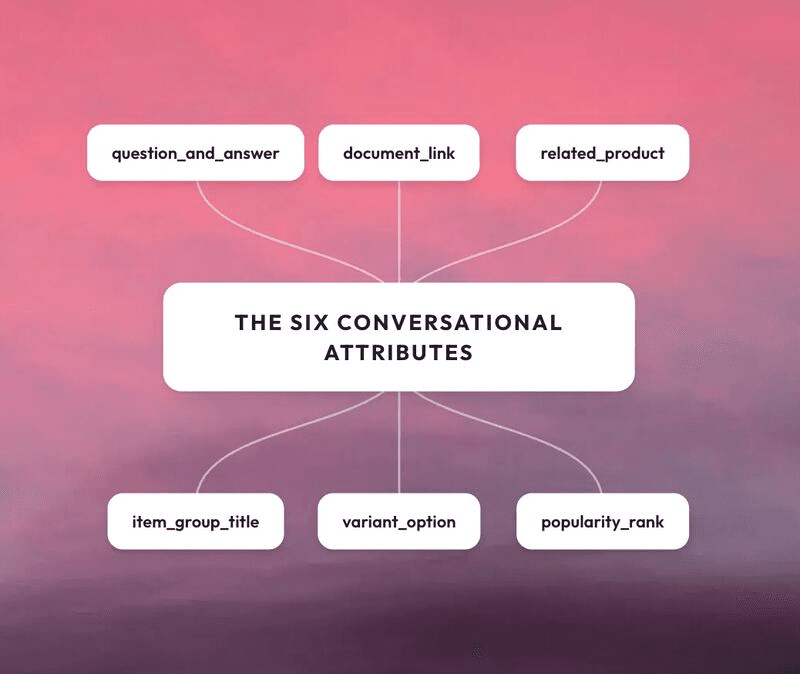
Every time Google introduces something as optional, it eventually becomes infrastructure for a business that generates roughly $300 billion a year in advertising revenue.
Mobile-friendly was optional. Page speed was optional. Structured data was optional.
Each one stopped being a choice.
At Google Marketing Live last month, Google launched conversational attributes, a new set of product-feed fields built for AI shopping. They're optional too, for now.
Look at how this one arrives. The fields won't affect whether your existing products stay approved. You can add them through a supplemental file without touching your main feed. And if the information already lives in your descriptions, Google tells you not to bother duplicating it. Every reason a busy team might say no has been removed in advance.
Platforms don't sand down the friction like that for things they're indifferent about. They do it when they need the data more than you currently need to give it.
And Google does need it.
Its AI shopping answers fall apart on thin listings. When someone asks a long, specific question in full sentences, the system has to pull real detail from somewhere, and most feeds can't supply it today. So Google built the easiest possible on-ramp and made the ask sound like a favor to the brand.
That's the pattern. Optional is how Google introduces what later becomes the price of entry.
It's already visible one layer over, where Google now calls rich product attributes the entry requirement for its agentic retail surfaces, not a nice-to-have.
For now, conversational attributes are optional. Google's history suggests optional rarely stays that way.

See Lily in action
Book a personalized demo and see how Lily can grow your retail revenue.
Related Blogs
It always turns out to be a feed
OpenAI spent a year pitching conversational shopping, then quietly rebuilt something that looks a lot like Google Merchant Center. Every platform that monetizes shopping ends up needing the same thing first: a feed.
By Purva Gupta
Automation commoditized everything except your feed
Google spent five years making paid search dramatically easier to run, which is exactly why it keeps getting more expensive to win. A classic Jevons paradox: automation standardized the edge brands used to build by hand. The one input it can't commoditize is your product feed.
By Purva Gupta
What actually goes in Google Merchant Center conversational attributes
What actually goes in Google Merchant Center conversational attributes: worked before-and-after values for apparel and home, plus where to mine them.
By Lily AI
Merchant Center suspended for misrepresentation: the checklist, in the order we find them
Merchant Center suspended for misrepresentation? Work this checklist in the order we find them, catch every mismatch, and appeal once with the whole fix.
By Lily AI
Product feed optimization: what it is, what actually moves revenue, and how to prove it
Product feed optimization is a vocabulary problem. The three layers, the eight changes that move revenue, and how to prove the lift with a control.
By Lily AI
$80M in incremental revenue last month, one optimization: the feed
Four 28-day Google Ads tests across a luxury house, a US department store, a global home retailer, and an athletic-wear brand. Every lift came from one place: the Google Merchant Center feed.
By Purva Gupta