Tapestry Exec: Saying No to AI is Like Saying ‘No, We Don’t Like Money’
AI. Drives. Sales.
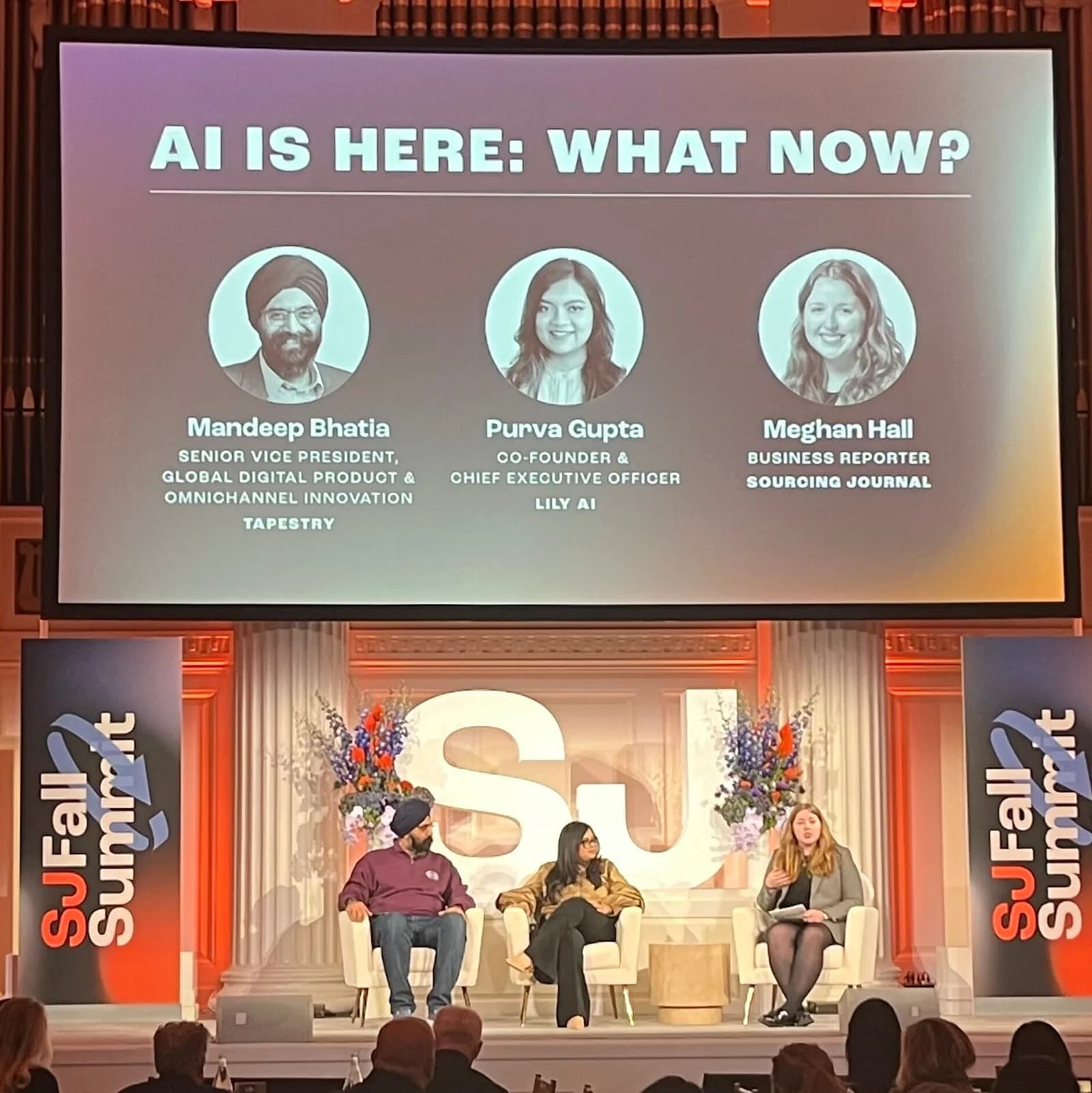
At the SJ Fall Summit in November, Tapestry’s SVP of Global Digital Product & Omnichannel Innovation opened the session (watch the full recording here!) with a mic-drop moment:
“If you’re saying no to AI, it’s like saying ‘No, we don’t like money.’”
And, of course, he’s right!
This same theme carried into the following Coresight Research Legends of Commerce event held just a few weeks later in December. There, in the peak of Cyber Week, executives from Coresight Research, Ken Pilot Ventures, New Balance, Todd Snyder, Wayfair, Tractor Supply Co., Bayer, Lily AI, and many more delved into the transformative impact of AI and the future of technology-powered retail.
During the discussion, Coresight highlighted the 110% income growth CORE opportunities to improve operating income and profitable lift:
- Create New Business
- Optimize Operations
- Reinvent the Supply Chain
- Enhance Customer Experiences
The Bottom Line
AI drives both bottom and top-line growth. Creating not just new efficiencies and increased productivity, but better customer experiences that drive sales.
As if you need any more convincing, check out our 2024 Retail AI Index to see the top 100 retailers and brands leading with AI, as well as dive into the five most impactful retail AI applications plus over a dozen case studies.
If you’re looking for proven AI solutions that move the needle and drive speed-to-impact, let’s talk!

See Lily in action
Book a personalized demo and see how Lily can grow your retail revenue.
Related Blogs
A buying standard for AI commerce
Four questions to ask before you fund any AI marketing tool. Every retail budget now carries an AI line item, and almost nothing on it arrives with a way to know whether it worked. Here's the standard, and the one shortcut to remember it: would it survive a finance review?
By Purva Gupta
The most expensive thing in retail right now
Brands are pouring attention into a future that isn't generating revenue yet, while the surfaces actually producing revenue today get treated like settled infrastructure. A preview of my CommerceNext session with Ken Pilot and Noam Paransky.
By Purva Gupta
You don't have an agency problem. You have an input problem.
A CMO fired three paid agencies in two years and decided you can't find a good one anymore. The real problem was upstream: the old agency edge has been commoditized, and the leverage has moved to the inputs only the brand controls.
By Purva Gupta
Google says conversational attributes are optional. History says otherwise.
Mobile-friendly, page speed, structured data: Google introduced each as optional, and each became the price of entry. Conversational attributes, its new AI-shopping feed fields, look like the next one.
By Purva Gupta
It always turns out to be a feed
OpenAI spent a year pitching conversational shopping, then quietly rebuilt something that looks a lot like Google Merchant Center. Every platform that monetizes shopping ends up needing the same thing first: a feed.
By Purva Gupta
Google may have just created a billion-dollar optimization market
AI visibility struggled to attract serious budget for a simple reason: nobody funds what they can't measure. With Google's new AI Performance Insights, it's measurable now. So the money moves.
By Purva Gupta