Blog
Winning every surface where people search and shop
Playbooks, product updates, and points of view on growing retail revenue with AI.
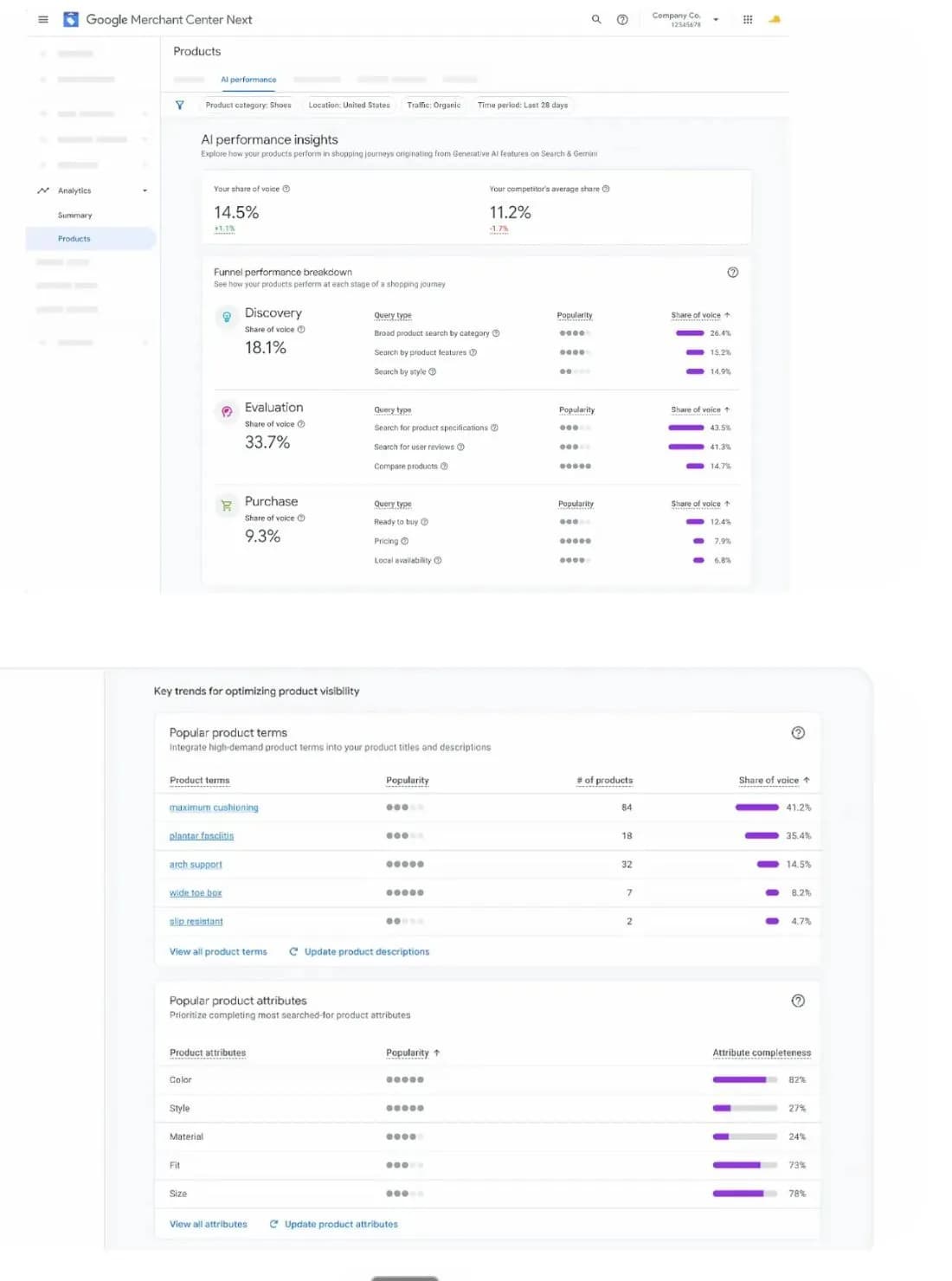
Google may have just created a billion-dollar optimization market
AI visibility struggled to attract serious budget for a simple reason: nobody funds what they can't measure. With Google's new AI Performance Insights, it's measurable now. So the money moves.
 Guides
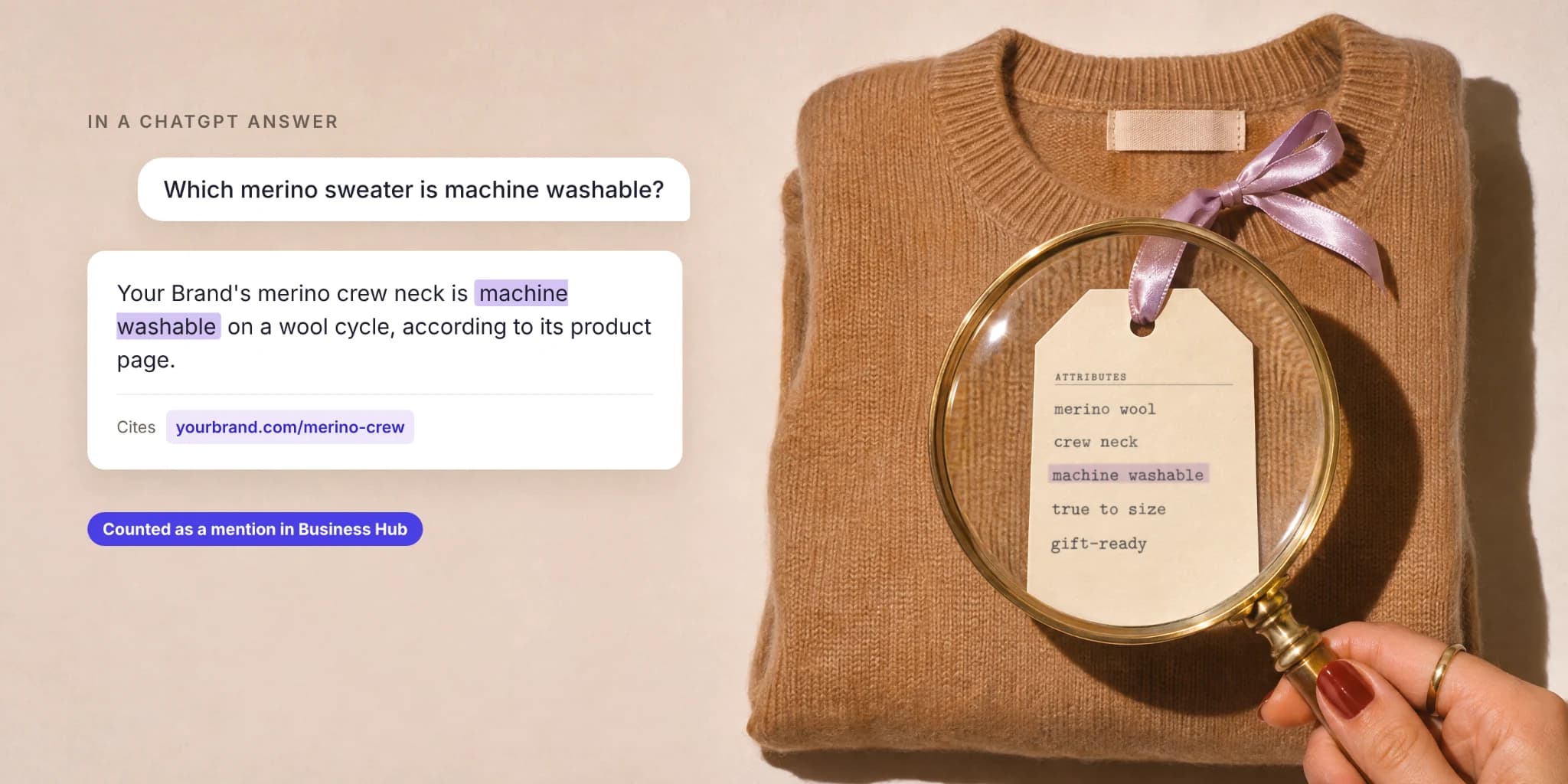
ChatGPT Business Hub: how it works, and what it counts as a mention
ChatGPT Business Hub lets a brand claim a profile, add a product feed and see its mentions. How it works, what counts as a mention, and what to fix first.
 Guides
Product feed management: when a feed tool is enough and when it isn’t
Product feed management explained: what feed tools do well, where the product content itself is the problem, and how to decide what your catalog needs.
 Guides
Ecommerce code freeze: retail sites lock just before holiday shoppers start searching
Your code freeze locks the site as holiday searches peak. What still changes without a deploy in Merchant Center, Meta and Shopify, and how to check.
 Guides
Product listing optimization for AI shopping: a thin listing reads like its cheaper twin
Product listing optimization for AI shopping: put who a product is for, what it’s for and how it feels in fields machines read, or they compare only price.
 Guides
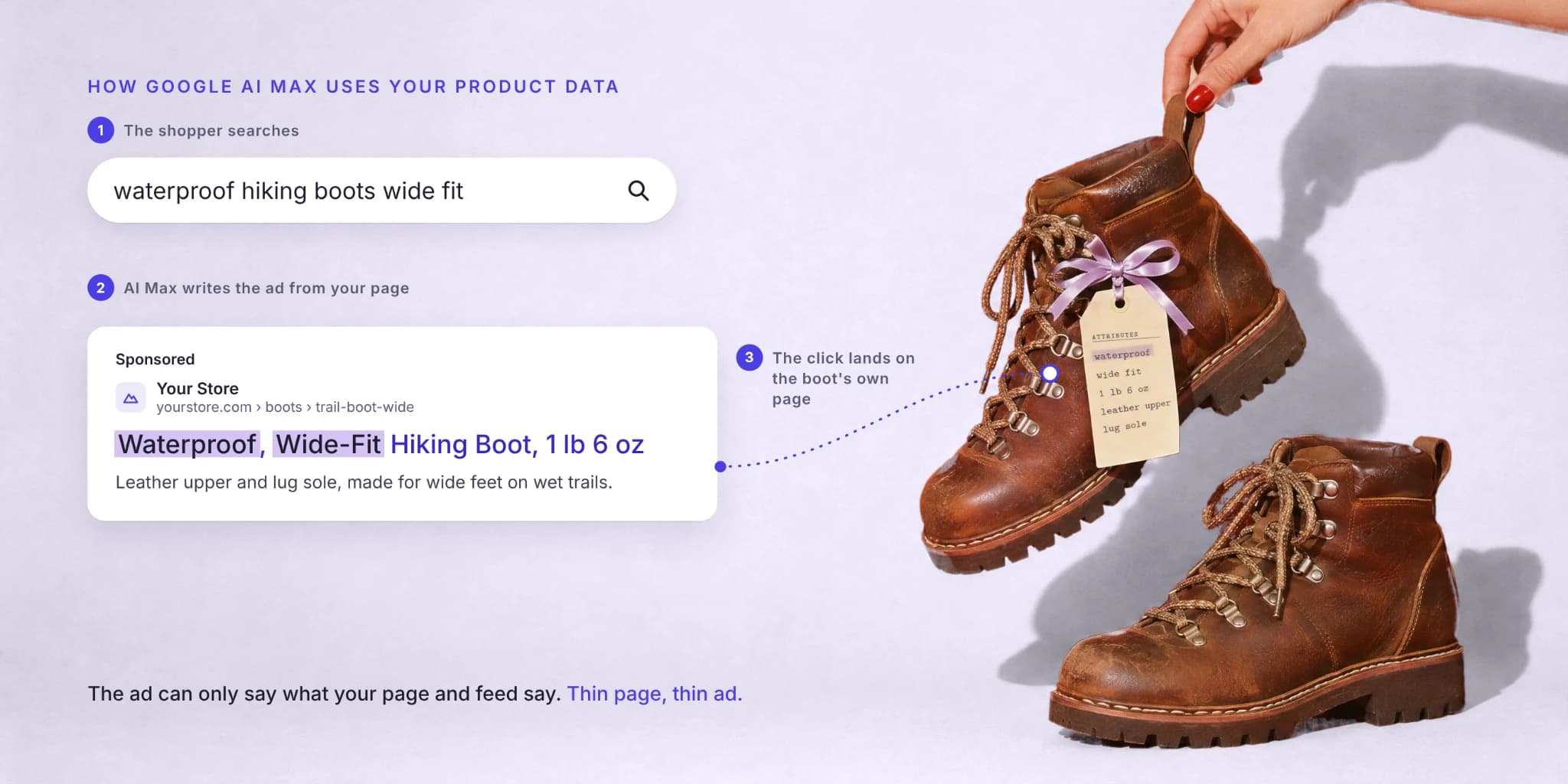
Google AI Max writes your ads from your site and your product feed
Google AI Max picks searches, writes ad text and chooses landing pages from your site and Merchant Center feed. What it reads and what to check first.
 Guides
Meta Commerce Manager in 2026: the catalog fields Meta's AI reads
Meta paused the terms that would let it crawl the sites behind your catalog. The Commerce Manager fields that matter, where they drift, what to check.
 Guides
Muse vs Instinct: what personal shopping agents mean for retailers
Meta Muse and Instinct shop on a person's behalf. How the two personal agents find products and check out, and what retailers should fix in product data.
 Guides
WebMCP for ecommerce: AI assistants can now shop your store directly
WebMCP lets AI assistants search and shop your store directly, and Shopify and BigCommerce switched it on. What it is, what assistants read, how to check.
 Guides
Google Universal Cart turns your price drops into shopper alerts
Google Universal Cart alerts US shoppers when saved items drop in price or restock. What it reads from your listings, and what to check before your freeze.
 Guides
Meta Muse holiday checklist: 10 fixes before Black Friday
Ten fixes retailers can make before Black Friday so Meta Muse can find, read and recommend their products, from gift facts to checkout and order tracking.
 Guides
How Meta Muse finds and picks products: a guide for retailers
Meta Muse finds products in three stages. See what it reads, why found is not the same as picked, and what retailers should fix before the holiday rush.
 Guides
ChatGPT product feed optimization: the fields that decide what gets shown
ChatGPT product feed optimization, field by field: what OpenAI requires, which optional fields match shopper questions, and what to write in each one.
 Guides
Google product category: 5,595 categories, and one for every shoe
Google's product taxonomy has 5,595 categories and one for every shoe. How to pick the right Google product category, with 25 examples and where it falls short.
 Guides
Google Shopping feed requirements: every field that matters in 2026
Google Shopping feed requirements for 2026: the seven required fields, when brand, GTIN, color and size apply, image rules, and fields that win searches.
 Product
How Lily Max checks AI-generated product descriptions at catalog scale so nothing goes missing
AI-generated product descriptions lose facts before they invent them. How Lily Max splits writing, contracting and checking, then scores records in five different ways.
 Product
How a Lily Max product feed A/B test can be set up in an afternoon
A product feed A/B test proves lift only if the split is balanced, the copies are in sync and the bidder is read on its own. How Lily Max sets one up fast.
 Product
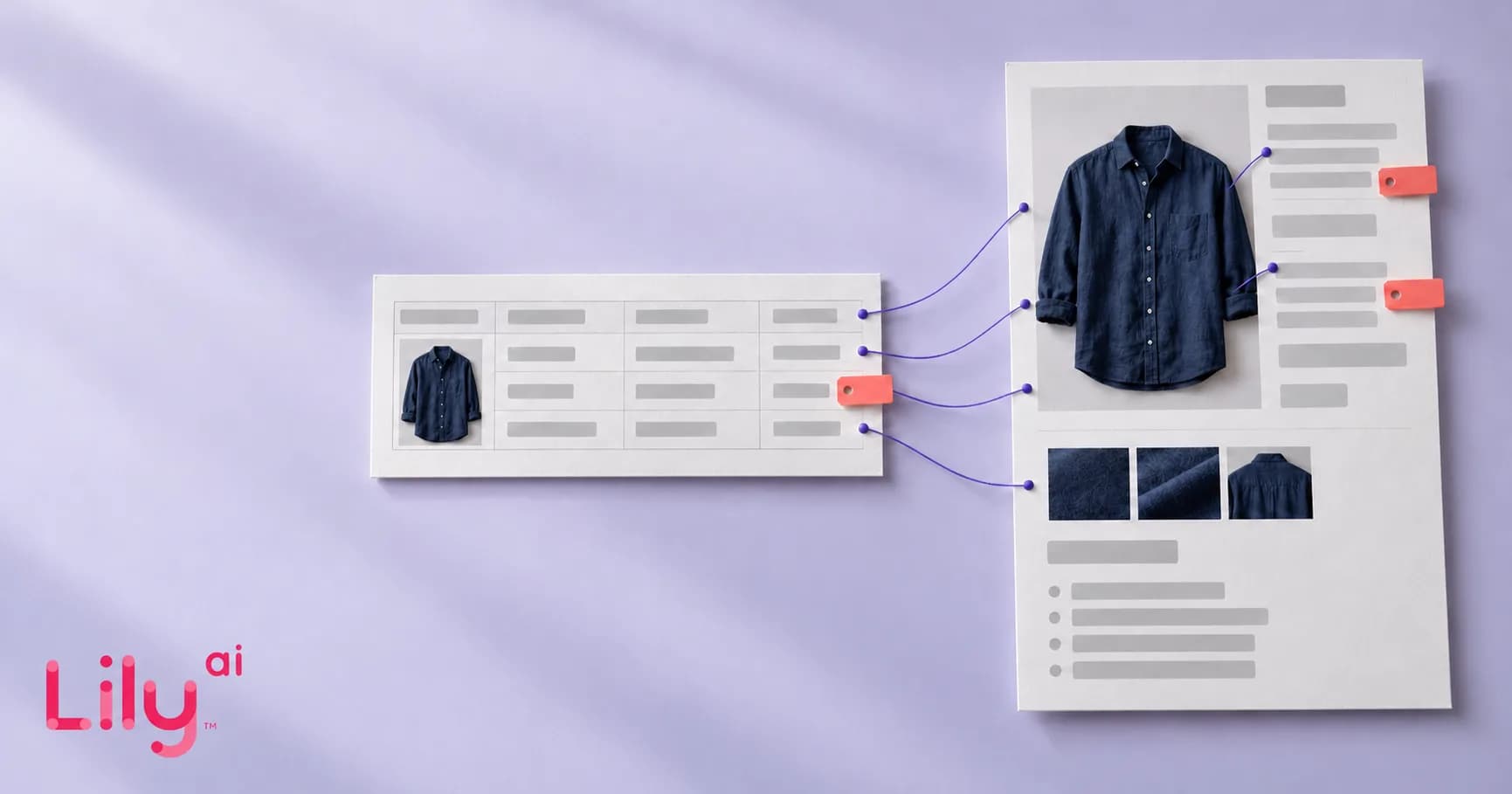
One record, four readers: product information syndication for Google, Meta, onsite search and AI assistants
Product information syndication breaks when four tools keep four copies. How Lily Max derives one record per product and renders it for Google, Meta and AI.
 Guides
Agentic commerce: what it is, what changed in 2026, and what a brand actually has to do
Agentic commerce is AI agents buying on a shopper's behalf. What changed in 2026, what an agent reads from your catalog, and what to fix before Q4.
GuidesDoes feed optimization increase sales? The anatomy of a controlled test
Does feed optimization increase sales? Yes, against a control. Get the full test design: matched spend, 28-day holdout, difference-in-differences.
GuidesHow AI Shopping Assistants Actually Pick Which Products to Recommend
AI shopping assistants retrieve before they rank. See what each surface reads from your product record, and which missing attributes disqualify you.
GuidesWhat actually goes in Google Merchant Center conversational attributes
What actually goes in Google Merchant Center conversational attributes: worked before-and-after values for apparel and home, plus where to mine them.
GuidesMerchant Center suspended for misrepresentation: the checklist, in the order we find them
Merchant Center suspended for misrepresentation? Work this checklist in the order we find them, catch every mismatch, and appeal once with the whole fix.
GuidesProduct attributes: which ones each discovery surface reads, and what a good one looks like
Which product attributes each discovery surface reads, what a well-formed value looks like, and the 2026 Merchant Center fields to fill in first.
GuidesProduct Data Enrichment: What It Means When the Machines Are the Reader
Product data enrichment is not filling empty fields. Get the working definition, the four readers, the boundary with PIM, and a way to measure lift.